
When someone mentions poker, most people immediately think of Texas Hold'em. That's understandable — Hold'em dominates television, tournaments and online rooms. But the world of poker is much richer than a single variant. There are dozens of different games, each with its own rules, strategies and charm.
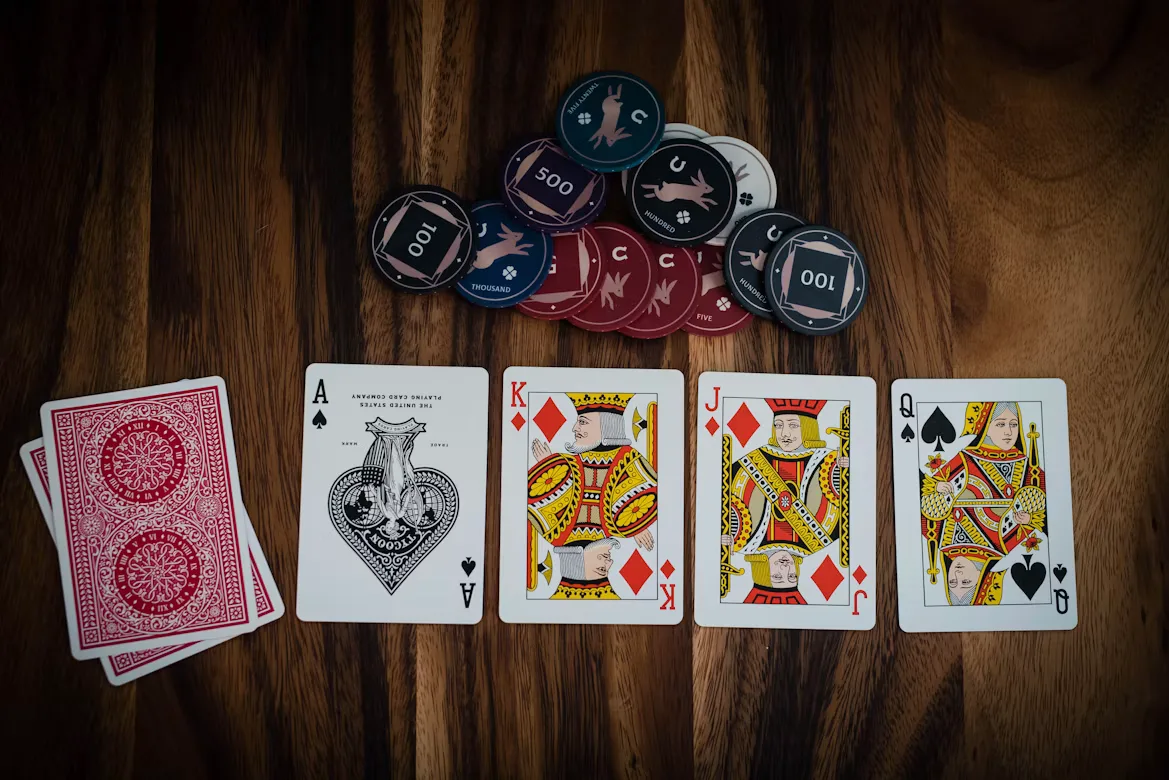
Trying out different poker variants doesn't just bring freshness to your game, it also makes you a better player — because it forces you to think more broadly, develop new skills and understand the very core of poker, not just individual formats.
Texas Hold'em and Omaha — the foundations of the modern game
Texas Hold'em is the queen of poker variants for good reason. Each player gets two face-down cards, and five community cards are dealt to the table in three rounds (flop, turn, river). The rules are easy to master, but the strategic depth is enormous — which explains why professionals can devote entire careers to this one game.

Omaha, especially in the Pot-Limit format (PLO), follows a similar structure, but with one key difference: each player gets four face-down cards and must use exactly two of them for their final hand. That detail drastically changes the game — hands get stronger, position becomes more valuable and the probabilities more complex. The result is action, drama and spectacular swings that are making PLO more and more popular among players looking for extra excitement.
Why try Omaha?
If Hold'em is getting predictable for you, Omaha is the perfect next step. More cards mean more possible combinations, which demands a deeper understanding of the math and of your opponents' ranges. Plus, mistakes cost a lot more — which makes the game more exciting, but also more unforgiving.
The classics — Stud and Razz
Before Hold'em took over the world, Seven Card Stud was synonymous with poker. This game doesn't use community cards — each player gets seven cards (some face up, some face down) and builds the best five-card hand. Since you can see some of your opponents' cards, success requires an excellent memory and keeping track of what has already been revealed.
Razz is a variant of Stud with a twist: the goal is to make the worst possible hand. The ace is a low card, flushes and straights are worth nothing, and the ideal hand is A-2-3-4-5. It sounds simple, but it requires completely different thinking and a different understanding of the pot.
Who are Stud games for?
These games are favorites of older generations and experienced players who love a psychological challenge and tactical memory. If you're looking for something slower, more methodical and more focused on observation, Stud and Razz will win you over.
Modern hits — Short Deck and draw games
Short Deck (also known as Six Plus Hold'em) is a relatively new variant that has quickly conquered high-stakes tables around the world. The idea is simple: all the cards from deuce to five are removed from the deck, so the game is played with just 36 cards. That drastically changes the odds — a flush becomes stronger than a full house, and the chance of making a strong hand skyrockets.

The game is more aggressive, faster and full of action. A favorite format of many pros such as Phil Ivey and Tom Dwan, Short Deck is a breath of fresh air for those who find standard Hold'em too routine.
Draw games — swapping cards
Draw poker variants, such as 2-7 Triple Draw and Badugi, take a completely different approach. There are no community cards — instead, players are dealt face-down cards and can exchange them over several betting rounds. The goal is to improve your hand through smart decisions about what to keep and what to throw away.
Badugi, for example, calls for four cards of different suits and different ranks — no pairs, no matching suits. It sounds strange, but it's extremely fun and tactically rich.
Mixed games — the real test of knowledge
At the top of the poker pyramid sit mixed disciplines such as HORSE (Hold'em, Omaha Hi-Lo, Razz, Stud, Stud Eight-or-Better). The game rotates from round to round, so a player has to master every variant to be competitive. It's no accident that HORSE tournaments are considered the true test of a complete player.

Another popular format is 8-Game, which adds even more variants to the mix. These games reward versatility, adaptability and a deep understanding of poker as a discipline — not just a single game.
Why play mixed formats?
If you seriously want to understand poker, mixed games are a must. They break habits, prevent stagnation and force you to think outside the box of a single strategy. Plus, the players who play them are usually more experienced and more serious — which means higher-quality play and better competition.
Which variants can you play with us?
At Kiril Poker Club the focus is currently on Texas Hold'em tournaments, but as the community grows, the plan is to introduce other formats too. If you're interested in Omaha, Stud or something more exotic, let us know — we can always organize private tables or experimental events.

For details on current tournaments and leagues, check out our schedule and follow the results in the league.
Why expand your repertoire?
Learning new poker variants isn't just fun — it makes you a better Hold'em player. Understanding different betting structures, math, psychology and strategies broadens your perspective. Learn to read opponents in Stud, develop patience in Razz or an instinct for pot odds in Omaha — and all of it carries back over into your Hold'em game.
Plus, variety prevents boredom and burnout. Poker should be a challenge, not a routine.
Join the club
Interested in poker, whether Hold'em or any other variant? Join the Kiril Poker Club community and play with us in a relaxed but competitive atmosphere. Registration is free, and all the details on how to join are on the guide to joining page.
Join the club: message the agent on Telegram, they send you the club app and get you to a table. Details are in the guide. See you at the table!